

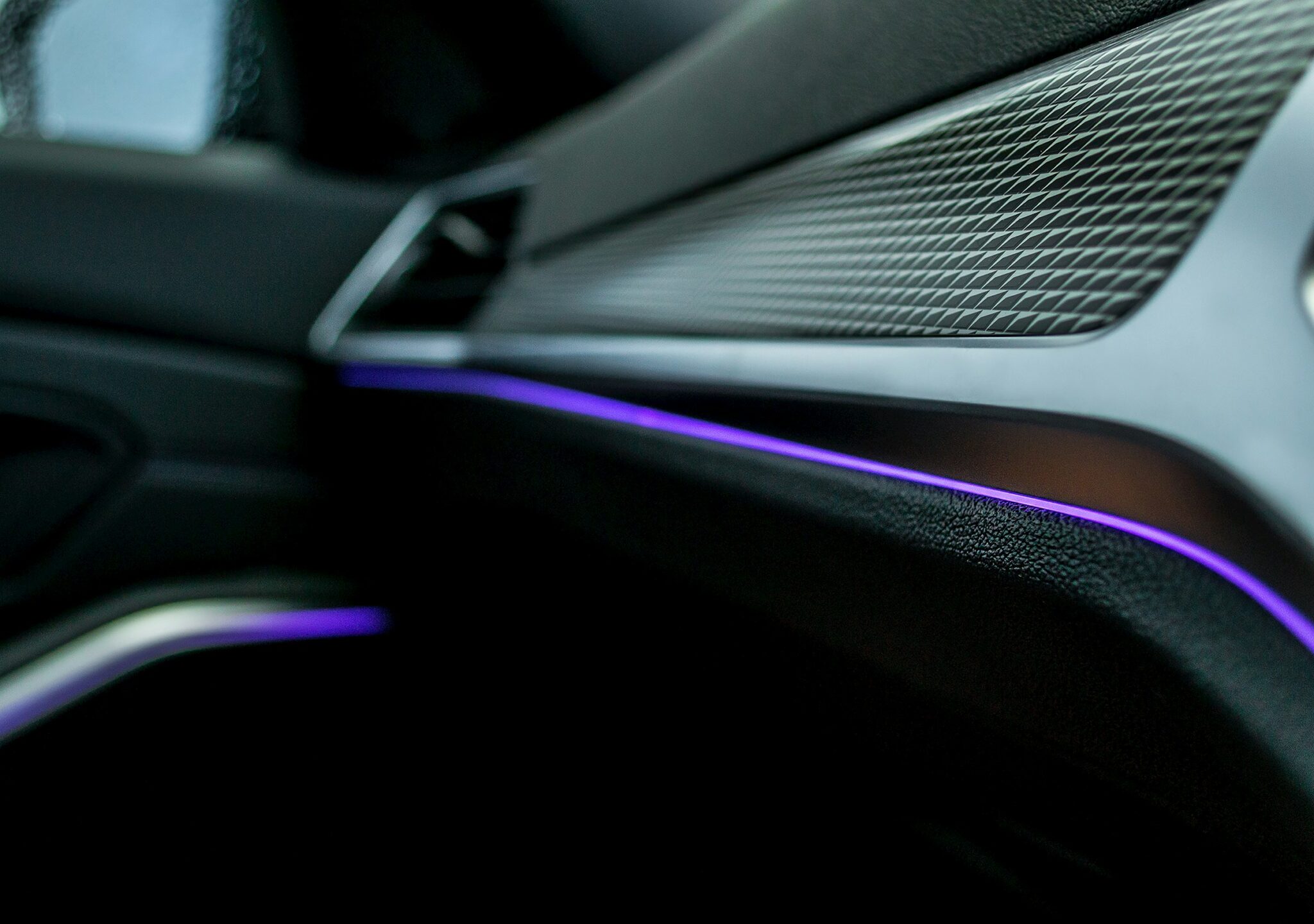
Optimal LED Car Lighting for Luxury Vehicles
In car LED lighting for luxury cars
Challenge:
The issue was provision of effective and exotic lighting for luxury cars. This has several key demands:
- Optimum light illumination in terms of optical power density (mW/cm2) or energy density (J/cm2).
- Even though the car’s energy source is substantial, the demands of high energy LEDs can sum to onerous levels. Power management is crucial. The LEDs need to be of the most optically efficient type.
- Heat is an issue. The key driver to making an LED deliver at its highest output is efficient dissipation of heat.
- In order to provide the colours that are most pleasing the wavelengths of the LEDs need to be within defined limits.
- Product design in as far as the LED arrays must fit allocated spaces and only have their output visible. Nobody wants to see LEDs themselves.
- Efficient management of arrays of such LEDs via, most commonly CANBUS, control protocols.
The market in question is demanding. Not surprisingly, those people paying premiums for what’s unique are very demanding. The solutions needed to be unique and inspiring.
Solution:
The solution came through close interaction with the client on optical requirements, the other demands being straightforward consequences of the prime optical requirement. Optimal electronic circuits with the required communications protocol were delivered and fully satisfied requirements.
Skills:
- Deep knowledge of the physics of optics
- Optimised heat sink design
Journey:
In many ways this project followed traditional development lines, but it must be emphasized that the EM delivers a USP in as far as it has profound knowledge of the optical theory (the physics) and its practical application.
Feel free to contact us if you have questions about this article or anything else.